When I just started with iReflect this semester, I was quite worried, and felt that this would be a very complex and hard to understand paper. Although it was also an English paper, when we were given the outlines of the paper by Patsy on the first day of class, I found that it was very different to iWrite which focused on creative writing and personal thinking. I was nervous because I could not find a suitable topic for my e-portfolio. In addition, my Japanese learning has met its first big barrier, which is why I suddenly found it hard to think of anything interesting to write about. In fact, I spent a very long time thinking about my studies, and finally decided to continue my study and do my best to complete this e-portfolio.
I combined my two major interests (Japan and food) and was going to introduce famous food in Japan, but when I began my research, I became more interested in other unique Japanese foods and their eating and drinking culture. This, then, became my major topic.
Firstly, I chose Blogger.com to display my e-portfolio. Patsy introduced us to Mahara, but it seemed more complex and I did not know how to manage it effectively. So I decided to stick with Blogger.com as I had used it for iWrite, which was also more familiar to me. Also, most of the classmates seemed to be using Blogger.com for their portfolio as well. I used a few pictures, hyperlinks, and video clips from Youtube in order to let the readers develop a closer understanding of the information that I was sharing. During that stage, I found that although what I had displayed related to my own interests, it did not include any of my university study progress during university, so I decided to share some of the difficulties which I came across with my studies this year, and my experiences from the Japanese restaurant I worked at.
Taking this paper allowed me to set myself a short term goal, and seriously consider my future (long term goal). E-portfolio has helped me to become more interested in my major course, and more confident in acquiring my Japanese skill. Apart from that, I also learned many other things such as the importance of copy right...etc. During class, Patsy has reminded us repeatedly about writing references correctly, which not only shows respect to the original writer, it also protects us from breaching the law. E-portfolio has been and still is very important to me. If I continue to record my progress, I am sure it will give me a lot of help when I seek employment in the future.
Personal reflection for my major study in university
This year I have greatly improved in my understanding of the Japanese learning. Having increased my knowledge of the complexities of grammar and learning much more vocabulary has made it much easier for me to understand Japanese blogs and websites through which I used to browse. This has also increased my interest in browsing Japanese websites.
I will be graduating in another one and a half years, although there still seems to be time for me to consider my future career pathways, it will not be easy to find a job which is related to all my studies at university. It will also be a challenge to convince the employers that I will be worth employing. I have set myself a short-term goal, to pass the Japanese Language Proficiency Test. This is a test held by the Japan Foundation and the Japan Educational Exchanges and Services. The test is categorized into four levels, with level one as the highest. The certificate gained through undergoing a series of assessments on writing, listening, and reading skills gives yourself a clear idea of where your standards are. Foreigners who seek to work in Japan would be required to have passed level two proficiency test. Therefore, sitting this test also gives me a chance to work in Japan.
Working in Japan and practically experiencing their culture has always been my biggest goal. Some time ago, I simply just wanted to have a trip to Japan, but since I began research on this country, I discovered more about their unique culture, high technology and creativity…etc. These encouraged me to seek my future career pathway. I set myself a long term goal, to work in a company which would send their employees to Japan, China, Taiwan, or other English speaking countries. Jobs such as purchasing and selecting items for companies also attract me.
My current job in a Japanese restaurant trains my listening, oral, and translating skills in Japanese. Although I am not skilled enough at this time, I believe that experience will accumulate and I will improve distinctly as time goes by. In future, I plan to pursue further education by going to translation or business courses, in order to bring my studies into full play.
The Japanese-Language Proficiency Test (JLPT). (n.d.). Retrieved October 30, 2008, from http://www.jlpt.jp/e/index.html
Japan Educational Exchanges and Services. (n.d.). Retrieved October 30, 2008, from http://www.jees.or.jp/index.htm
2008年10月30日 星期四

2008年10月29日 星期三
My second year of Japanese
The difference between this year’s Japanese course and the last is that we have advanced from basic grammar to casually used conversations, such as polite expressions when you talk to elderly people or your boss, which again differs from the way you talk to your friends. This often confuses me. This week we have been focusing on practising honorific and humble expressions. When we are talking in an honorific of humble manner, many transformations in the wording of verbs take place. For example, “iku” (which means “to go”) has to be changed to “irrashaimasu”; “taberu” (to eat) has to be changed to “meshiagarimasu”…etc. Even if you do not understand Japanese, you can tell how complex it becomes, and there is no connection between the two forms what so ever, is there? There are also plenty more transformations of verbs like these to memorise. Greeting expressions also have their own polite forms. For example, “doodesuka?” (How about it?) has to be changed to “ikagadesuka?”.
The examples mentioned above are examples of honorific expressions. Relatively, there are also plenty of different transformations for humble expressions as well. I am very impressed at how Japanese people can think of so many variations of expressions; it is no wonder they are known to be a very manner-focused country.
A few days ago, for our oral assessment, I was asked to imagine myself in a situation where I had just returned to New Zealand from a study period in Japan, and explain to my teacher using polite expressions, about the people who looked after me in Japan and what I had done. When I had finished my assessment, I felt that it was not easy to speak using these expressions. However, if I am to work in Japan in the future, I must learn all of these expressions by heart.
Admin, (2008) Polite Japanese 敬語. Retrieved October 29, 2008, from http://www.thejapanesepage.com/grammar/chapter_eight/keigohttp://www.jlpt.jp/e/index.html
The examples mentioned above are examples of honorific expressions. Relatively, there are also plenty of different transformations for humble expressions as well. I am very impressed at how Japanese people can think of so many variations of expressions; it is no wonder they are known to be a very manner-focused country.
A few days ago, for our oral assessment, I was asked to imagine myself in a situation where I had just returned to New Zealand from a study period in Japan, and explain to my teacher using polite expressions, about the people who looked after me in Japan and what I had done. When I had finished my assessment, I felt that it was not easy to speak using these expressions. However, if I am to work in Japan in the future, I must learn all of these expressions by heart.
Admin, (2008) Polite Japanese 敬語. Retrieved October 29, 2008, from http://www.thejapanesepage.com/grammar/chapter_eight/keigohttp://www.jlpt.jp/e/index.html
My work experience in a Japanese restaurant
Since May, I have begun to work in a popular Japanese restaurant at Half Moon Bay called Gouemon. My manager and most of the staff there are Japanese, so I felt that this was a very good opportunity for me. Apart from being able to practise my Japanese listening and communication skills, I can also learn much more about their eating and drinking culture and understand by practical experience.
After I started working there, I realized that my manager has a very strict policy on the freshness of food. Apart from ensuring the best quality food, presentation of the food is also very important. I guess that deliciousness and decoration are the main characteristics of Japanese food. I was told by my manager that we had to stop whatever we were working on, when a meal was put on to the bar stand ready to be served, and take it to the customer, unless we were serving other customers at that time. This was to ensure the taste of the food as well as respect to the customers.
After these few months of work experience, I learned many names of Japanese courses, and also some simple recipes, and this has increased my interest in Japanese food. Apart from that, I also learnt a variety of ways of serving customers, such as serving Asian customers with hot tea once they take their seats, and asking other customers of other cultures whether they prefer wine or juice instead of serving hot tea. Also, I discovered that the staff in the restaurant tend to observe the different habits and needs of every customer, and keep these in mind, so that they can do some prior preparation before those customers arrive again. I have always been very fond of such courtesy to customers from Japanese people.
I have always been very happy to be able to work at this restaurant. It is interesting to listen to the conversations between my manager and other Japanese staff about Japanese matters, and I hope some day I will be able to speak Japanese fluently among them! I think it would be very amusing to speak to my manager in the Osaka accent which I have recently learned.

GOUEMON
PH 09 534 2959
Shop 2, Half Moon Bay Marina, Aratai Rd, Bucklands Beach.
Open Tuesday to Sunday 12:00pm-2:00pm & 6:00pm to 10:00pm


After I started working there, I realized that my manager has a very strict policy on the freshness of food. Apart from ensuring the best quality food, presentation of the food is also very important. I guess that deliciousness and decoration are the main characteristics of Japanese food. I was told by my manager that we had to stop whatever we were working on, when a meal was put on to the bar stand ready to be served, and take it to the customer, unless we were serving other customers at that time. This was to ensure the taste of the food as well as respect to the customers.
After these few months of work experience, I learned many names of Japanese courses, and also some simple recipes, and this has increased my interest in Japanese food. Apart from that, I also learnt a variety of ways of serving customers, such as serving Asian customers with hot tea once they take their seats, and asking other customers of other cultures whether they prefer wine or juice instead of serving hot tea. Also, I discovered that the staff in the restaurant tend to observe the different habits and needs of every customer, and keep these in mind, so that they can do some prior preparation before those customers arrive again. I have always been very fond of such courtesy to customers from Japanese people.
I have always been very happy to be able to work at this restaurant. It is interesting to listen to the conversations between my manager and other Japanese staff about Japanese matters, and I hope some day I will be able to speak Japanese fluently among them! I think it would be very amusing to speak to my manager in the Osaka accent which I have recently learned.
GOUEMON
PH 09 534 2959
Shop 2, Half Moon Bay Marina, Aratai Rd, Bucklands Beach.
Open Tuesday to Sunday 12:00pm-2:00pm & 6:00pm to 10:00pm


2008年10月20日 星期一
References for links and pictures of Chocolate Adventure
明治製菓:100%チョコレートカフェ. MEIJI SEIKA KAISHA, LTD (2008) Retrieved October 14, 2008, from http://www.meiji.co.jp/sweets/choco-cafe/shop/365dayschocolates/index.html
Picture of 100% Chocolate Cafe. Retrieved October 14, 2008, from http://tw.f14.yahoofs.com/myper/D4I.kQKFERla1Xpj_vMcTW5bsA--/blog/ap_20080201100237294.jpg?TTEdV_IBslPZMV6i
楽天市場(Rakuten Ichiba). Retrieved October 14, 2008, from http://item.rakuten.co.jp/itohkyuemon/514670-1/
Picture of Matcha chocolate. Retrieved October 14, 2008, from http://tw.f14.yahoofs.com/myper/D4I.kQKFERla1Xpj_vMcTW5bsA--/blog/ap_20080201100235424.jpg?TTEdV_IBFwDRGLJE
Pictures of chocolate tool kit. Retrieved October 14, 2008, from http://tw.f14.yahoofs.com/myper/D4I.kQKFERla1Xpj_vMcTW5bsA--/blog/ap_20080201100229242.jpg?TTEdV_IBWHqv6JXd
http://tw.f14.yahoofs.com/myper/D4I.kQKFERla1Xpj_vMcTW5bsA--/blog/ap_20080201100623292.jpg?TTEdV_IBjY4f48Hf
Message chocolate. MEIJI SEIKA KAISHA, LTD (2008) Retrieved October 14, 2008, from http://www.meiji.co.jp/shopping/choco-cafe/tabletter/orderpack.php?numtabs=16
Picture of message chocolate. Retrieved October 14, 2008, from http://tw.f14.yahoofs.com/myper/tx4VyUWcERkPjZ4tbSYUzxM-/blog/ap_20080207095432423.jpg?TTIrV_IBrVB6omCT
YouTube (2007). Erika Valentine's Chocolate Advertisement. Retrieved October 15, 2008, from http://www.youtube.com/watch?v=vIw8kK_1MTU
Picture of 100% Chocolate Cafe. Retrieved October 14, 2008, from http://tw.f14.yahoofs.com/myper/D4I.kQKFERla1Xpj_vMcTW5bsA--/blog/ap_20080201100237294.jpg?TTEdV_IBslPZMV6i

楽天市場(Rakuten Ichiba). Retrieved October 14, 2008, from http://item.rakuten.co.jp/itohkyuemon/514670-1/
Picture of Matcha chocolate. Retrieved October 14, 2008, from http://tw.f14.yahoofs.com/myper/D4I.kQKFERla1Xpj_vMcTW5bsA--/blog/ap_20080201100235424.jpg?TTEdV_IBFwDRGLJE

Pictures of chocolate tool kit. Retrieved October 14, 2008, from http://tw.f14.yahoofs.com/myper/D4I.kQKFERla1Xpj_vMcTW5bsA--/blog/ap_20080201100229242.jpg?TTEdV_IBWHqv6JXd

http://tw.f14.yahoofs.com/myper/D4I.kQKFERla1Xpj_vMcTW5bsA--/blog/ap_20080201100623292.jpg?TTEdV_IBjY4f48Hf

Message chocolate. MEIJI SEIKA KAISHA, LTD (2008) Retrieved October 14, 2008, from http://www.meiji.co.jp/shopping/choco-cafe/tabletter/orderpack.php?numtabs=16
Picture of message chocolate. Retrieved October 14, 2008, from http://tw.f14.yahoofs.com/myper/tx4VyUWcERkPjZ4tbSYUzxM-/blog/ap_20080207095432423.jpg?TTIrV_IBrVB6omCT

YouTube (2007). Erika Valentine's Chocolate Advertisement. Retrieved October 15, 2008, from http://www.youtube.com/watch?v=vIw8kK_1MTU
References for links and pictures
Japan Map-Japan Travel Map. E-Japan Navi Co.,Ltd (2001) Retrieved October 21, 2008, from http://www.e-japannavi.com/syuyu/japanmap.shtml
What's kusaya. (n.d.). Retrieved October 10, 2008, from http://homepage3.nifty.com/iketa/page017025.html
Pictures of kusaya - Retrieved October 10, 2008, from http://f23.yahoofs.com/myper/D4I.kQKFERla1Xpj_vMcTW5bsA--/blog/ap_F23_20080531033844337.jpg?TTAPV_IBpQSOZfHw
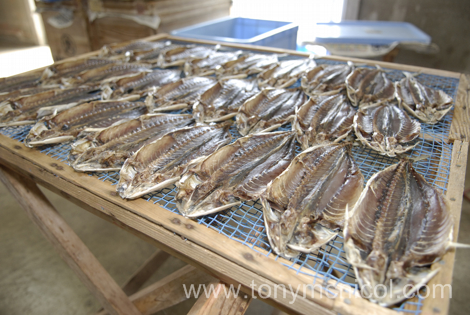
http://tonymcnicol.com/wp-content/uploads/2008/09/kusaya2.jpg
Kazuo, S. (1998) Natto for Everybody Homepage. Retrieved October 10, 2008, from http://www.gaia21.net/natto/natto.htm
Picture of natto - Retrieved October 10, 2008, from http://farm4.static.flickr.com/3054/2453049447_2c52671087.jpg
Fugu http://en.wikipedia.org/wiki/Fugu Retrieved October 10, 2008, from wikipedia
Pictures of Fugu - Retrieved October 10, 2008, from http://en.wikipedia.org/wiki/Image:Fugu.Tsukiji.CR.jpg
http://upload.wikimedia.org/wikipedia/ja/b/bd/Tessa.jpg
Pictures of naresushi - Retrieved October 10, 2008, from http://www.jakyoto.com/jakyoto/recipe/030.jpg
YouTube (2006). Natto. Retrieved October 10, 2008, from http://uk.youtube.com/watch?v=T_u63CwsdMA
What's kusaya. (n.d.). Retrieved October 10, 2008, from http://homepage3.nifty.com/iketa/page017025.html
Pictures of kusaya - Retrieved October 10, 2008, from http://f23.yahoofs.com/myper/D4I.kQKFERla1Xpj_vMcTW5bsA--/blog/ap_F23_20080531033844337.jpg?TTAPV_IBpQSOZfHw

http://tonymcnicol.com/wp-content/uploads/2008/09/kusaya2.jpg
Kazuo, S. (1998) Natto for Everybody Homepage. Retrieved October 10, 2008, from http://www.gaia21.net/natto/natto.htm
Picture of natto - Retrieved October 10, 2008, from http://farm4.static.flickr.com/3054/2453049447_2c52671087.jpg

Fugu http://en.wikipedia.org/wiki/Fugu Retrieved October 10, 2008, from wikipedia
Pictures of Fugu - Retrieved October 10, 2008, from http://en.wikipedia.org/wiki/Image:Fugu.Tsukiji.CR.jpg

http://upload.wikimedia.org/wikipedia/ja/b/bd/Tessa.jpg

Pictures of naresushi - Retrieved October 10, 2008, from http://www.jakyoto.com/jakyoto/recipe/030.jpg

YouTube (2006). Natto. Retrieved October 10, 2008, from http://uk.youtube.com/watch?v=T_u63CwsdMA
References for links and pictures of stand-up eating shop (Tachigui) in Japan
Where to eat Ramen-Tachigui. - World Ramen.net. (2001). Retrieved October 10, 2008, from
http://www.worldramen.net/ABC/Wheretoeatyatai/Wheretoeattachigui.html
Photos of stand-up eating shop. (n.d.). Retrieved October 10, 2008, from
http://www3.famille.ne.jp/~ki-palm/soba/higashi_kanagawa.htm
http://www3.famille.ne.jp/~ki-palm/soba/sapporo_bensaitei.htm
https://blogger.googleusercontent.com/img/b/R29vZ2xl/AVvXsEhbe2ObSMsmR9jlnVcO4WhYoPkkF6J7pH69SIN1Nns4eTE8g8xLed99upJhiodUjMx7D7CNZJzVkYCr8oVf-xQALSIXFCevlUk6k_Op46zOnMYisqwh4pTN1foK4DFaj4OSAeoOwDj3LY4/s1600-h/FN080708-1.jpg
http://www.worldramen.net/ABC/Wheretoeatyatai/Wheretoeattachigui.html
Photos of stand-up eating shop. (n.d.). Retrieved October 10, 2008, from
http://www3.famille.ne.jp/~ki-palm/soba/higashi_kanagawa.htm
http://www3.famille.ne.jp/~ki-palm/soba/sapporo_bensaitei.htm
https://blogger.googleusercontent.com/img/b/R29vZ2xl/AVvXsEhbe2ObSMsmR9jlnVcO4WhYoPkkF6J7pH69SIN1Nns4eTE8g8xLed99upJhiodUjMx7D7CNZJzVkYCr8oVf-xQALSIXFCevlUk6k_Op46zOnMYisqwh4pTN1foK4DFaj4OSAeoOwDj3LY4/s1600-h/FN080708-1.jpg

訂閱:
文章 (Atom)
關於我自己

- M* WAN-YUN, KAO
- I come from Taiwan. It has been 4 years since I came to nz to study overseas. I am currently an undergraduate student of Japanese in AUT University. To me, Japan has always been a culturally enriched country, which is why I have always had a great interest in of their culture. I love to discover interesting and different facts about it, whether it is about food and drink, current trends or new aspects of the language.